
Why SimplyClear Aligners Are Exploding in Popularity in Dayton, OH

A straighter smile does more than improve your appearance—it enhances your oral health, boosts long-term function, and increases your confidence in everyday life. At Almoney Dental Group in Dayton, OH, we combine the latest orthodontic technology with personalized care to help patients of all ages achieve beautifully aligned teeth in a comfortable, convenient, and discreet way. One of our most popular solutions is SimplyClear® Aligners, an advanced clear aligner system designed to straighten teeth without the look and feel of traditional braces.

Whether you’re a teen, busy professional, or adult finally ready to improve your smile, SimplyClear® Aligners offer a modern and effective path toward lasting results. Below, we explore how orthodontics works, why clear aligners are changing the way patients experience treatment, when aligners are the right option, and how Almoney Dental Group uses innovative tools like the Get Grin™ app to keep your treatment convenient and on track.

Why Orthodontics Matters: More Than a Cosmetic Improvement

Orthodontics is often associated with cosmetic benefits—a straighter, more attractive smile in photos and social interactions. But well-aligned teeth also play a crucial role in oral health and long-term function.

Health Benefits of a Straighter Smile

Aligned teeth contribute to:

  • Better brushing and flossing since straight teeth are easier to clean
  • Lower risk of cavities and gum disease by reducing plaque traps
  • More comfortable chewing and biting
  • Reduced wear on teeth caused by misaligned bite forces
  • Improved jaw function, reducing tension, headaches, and TMJ strain

When teeth are crooked, crowded, or unevenly spaced, it’s not just cosmetic—it can affect the health of your gums and supporting bone. Orthodontic treatment corrects these problems, promoting healthier and more stable long-term oral health.

Introducing SimplyClear® Aligners: A Clear Alternative to Metal Braces

SimplyClear® Aligners combine the power of orthodontic science with the convenience and aesthetics today’s patients want. These transparent, removable trays gradually shift teeth into their ideal positions, using a series of customized aligners fabricated specifically for your smile.

Almoney Dental Group partners with SimplyClear® to deliver precision-made aligners designed around your facial structure, bite, and long-term health. Each tray is shaped using advanced digital 3-D imaging, allowing for highly accurate tooth movements and predictable results.

How SimplyClear® Aligners Compare to Traditional Metal Braces

Metal braces remain a highly effective orthodontic treatment—but they’re not always the best choice for every lifestyle. Clear aligners offer numerous advantages that make treatment easier and more appealing for many patients.

Advantages of SimplyClear® Over Metal Braces

1. Nearly Invisible

Clear aligners are discreet and blend seamlessly with your smile—no metal wires or brackets.

2. Removable for Eating and Cleaning

You can:

  • Eat whatever you like
  • Brush and floss normally
  • Remove trays for social events, sports, or photos

Traditional braces require dietary restrictions and more challenging cleaning routines.

3. Comfortable and Metal-Free

SimplyClear® Aligners are smooth and custom-fit, reducing irritation to cheeks and gums. There are no wires to tighten, which means fewer adjustments and far less discomfort.

4. Fewer Office Visits

With the Get Grin™ remote monitoring system (explained below), progress checks can happen from home, making treatment ideal for busy patients.

5. Predictable Treatment Planning

3-D digital scans allow you to preview your expected tooth movement and visualize your results before treatment even begins.

What SimplyClear® Aligners Can and Cannot Correct

Clear aligners are powerful—but they are not the right solution for every orthodontic case. At Almoney Dental Group, your dentist will evaluate your bite, alignment, and goals to determine whether SimplyClear® Aligners are the best treatment option.

SimplyClear® Aligners ARE Ideal For:

  • Mild to moderate crowding
  • Minor to moderate spacing
  • Rotations of certain teeth
  • Overbites and open bites (mild to moderate)
  • Relapse cases after previous orthodontic treatment
  • Patients who prefer a discreet, removable solution

Aligners Are Typically NOT Ideal For:

  • Severe bite discrepancies
  • Complex tooth movements (such as major vertical changes)
  • Impacted teeth
  • Cases requiring significant jaw repositioning
  • Patients unlikely to wear aligners consistently

In more complex cases, traditional orthodontics may provide better control and outcomes. But for the majority of adults and teens with straightforward alignment needs, aligners can achieve excellent results.

Orthodontics for Kids, Teens, and Adults

One of the greatest advantages of SimplyClear® Aligners is their versatility. Modern clear aligner therapy is designed for:

Kids

Some children may qualify for early interceptive treatment, depending on the stage of tooth eruption and the orthodontic issue. Early aligner therapy can:

  • Make room for adult teeth
  • Prevent worsening crowding
  • Improve jaw growth patterns

Teens

Teens love clear aligners because they fit seamlessly into daily life and are virtually invisible in photos and social settings. Teen-specific features like compliance indicators help ensure successful treatment.

Adults

Adults often choose aligners because they want orthodontic improvement without noticeable hardware. SimplyClear® is an excellent choice for adults who:

  • Want a professional appearance
  • Prefer fewer in-office visits
  • Have had relapse after childhood braces
  • Have new alignment issues due to aging

At Almoney Dental Group, we routinely treat patients from childhood through retirement age with successful and transformative orthodontic outcomes.

Treatment Timeline: What to Expect with SimplyClear® Aligners

Your orthodontic journey at Almoney Dental Group is efficient, streamlined, and personalized.

1. Consultation & 3-D Scans

We begin with digital imaging to assess your smile and design your aligner plan. This allows us to show you a simulated preview of your expected results.

2. Active Treatment Phase

Most mild to moderate cases finish in 6–18 months, depending on complexity and your consistency with wearing the trays.

You will:

  • Wear aligners 22 hours a day
  • Remove them only to eat, drink (except water), and brush
  • Change trays regularly as directed to advance tooth movement

3. Remote Monitoring with the Get Grin™ App

To minimize office visits and maximize convenience, Almoney Dental Group uses Get Grin™, a remote monitoring platform.

With the Grin Scope® and the Grin App, patients can:

  • Scan their teeth at home
  • Send images directly to the office
  • Receive professional guidance without an in-person visit

This system is especially helpful for:

  • Busy professionals
  • Students
  • Parents managing multiple schedules
  • Anyone hoping to reduce the number of appointments

You’ll still visit the office every 10–12 weeks to ensure treatment is progressing as expected.

4. Finishing and Refinements

Near the end of treatment:

  • Updated 3-D scans are taken
  • Refinement trays are created if needed
  • Every detail is perfected before moving on to retainers

5. Retainers to Maintain Your Results

Once your smile is aligned, wearing retainers nightly prevents shifting. Retainers look and feel similar to your final active tray for a smooth transition.

How to Care for Your Aligners

Proper care helps keep aligners clear, fresh, and comfortable.

Daily Cleaning Routine

  • Brush aligners gently with a soft toothbrush
  • Rinse with lukewarm water (never hot)
  • Avoid abrasive toothpaste
  • Soak periodically using cleansing crystals to prevent odors

Do’s & Don’ts

Do:

  • Store aligners in their case when not in use
  • Rinse after meals before reinserting

Don’t:

  • Eat or drink (except water) with aligners in place
  • Expose aligners to heat, which can distort the plastic

Following these steps will keep your trays clean and your treatment on schedule.

Payment Options for SimplyClear® Aligners

At Almoney Dental Group, orthodontic care should be accessible for every patient. That’s why we offer multiple flexible payment options.

Insurance Benefits

Orthodontic benefits included in many dental plans apply to SimplyClear® Aligners in the same way they would to metal braces. Our team will:

  • Verify your coverage
  • Handle your claims
  • Maximize your reimbursement

Interest-Free Payment Plans

We offer in-house, interest-free financing, allowing you to spread payments evenly throughout your treatment.

Extended Financing Through CareCredit®

For longer payment terms or a lower monthly cost, CareCredit® offers flexible financing options designed to fit your budget comfortably.

With these options, clear aligner therapy is more accessible and affordable than ever.

Are SimplyClear® Aligners Right for You?

If you’ve been thinking about improving your smile, correcting crowding, or addressing bite problems—without the challenges of traditional braces—SimplyClear® Aligners may be the perfect solution. With predictable digital treatment planning, discreet appearance, removable convenience, and fewer in-office visits thanks to Get Grin remote monitoring, aligners offer the modern orthodontic experience today’s patients want.

At Almoney Dental Group in Dayton, OH, our experienced team will guide you through every step of your orthodontic journey, ensuring your comfort, confidence, and long-term dental health.

Schedule Your Orthodontic Consultation Today

Ready to find out whether SimplyClear® Aligners can transform your smile? Contact Almoney Dental Group to schedule your consultation. Our team is here to provide the personalized care, advanced technology, and supportive environment you need to achieve the healthy, beautiful smile you deserve.

We have three dental offices in Dayton, OH. Select the location closest to you.

Dental Implants in Dayton, Ohio: A Comprehensive Guide

Has a missing tooth or multiple missing teeth got you thinking, “What’s next?” You’re in the right place. At Almoney Dental Group—serving the Greater Dayton area from our offices in Kettering, Miamisburg, and Delco Park—we help local patients understand their options and choose the treatment that’s best for their smile, health, and lifestyle.

In this post, we’ll explore why dental implants are often the best choice when compared to a traditional bridge or doing nothing at all. We’ll answer the most common questions people in Dayton ask about implants and show you how to take the next step toward a renewed smile.

What are dental implants?

A dental implant is a synthetic structure (typically a titanium post) placed in the jawbone where a tooth root used to be. After healing, it serves as the foundation for a custom crown, bridge, or denture.
At Almoney Dental Group, we provide implant-based tooth replacement treatment in Dayton, Kettering, and Miamisburg.

Unlike a conventional dental bridge, which sits on top of the gums and is anchored to neighboring teeth, an implant replaces the root and the crown of the missing tooth, preserving bone and function more completely.

showing the dental implant parts and below the gum line 3D illustration

Why Not Just Leave the Space Unfilled?

You might wonder: “If only one tooth is missing and I don’t mind the gap – what’s the harm?” There are several important health, aesthetic, and functional reasons to replace a missing tooth:

  • Bone loss: When a tooth is lost, the jawbone around the empty socket gradually begins to resorb (shrink) because it’s no longer stimulated by a root in place. Over time, this can change your facial structure and lead to further dental problems.
  • Shifting teeth: Adjacent teeth may drift into the empty space, altering your bite, creating alignment issues, or leading to other teeth becoming loose.
  • Reduced chewing and speaking ability: Even a missing back tooth can affect how well you chew, and missing front teeth can affect speech and confidence.
  • Aesthetic concerns & self-confidence: Missing teeth can affect your smile and the way you feel about your appearance.
  • Increased wear on other teeth: The remaining teeth may bear more load, which can lead to more wear, fractures, or early failure.

By choosing to replace the missing tooth (or teeth), you’re taking a proactive step to protect your oral health, facial structure, and quality of life.

Dental Implants vs. Bridges: How they compare

Let’s dig into how implants stack up against bridges — a common alternative.

What is a dental bridge?

A dental bridge typically uses the two healthy teeth adjacent to a gap as anchors (abutments). A false tooth (pontic) spans the gap and is secured by crowns on the neighboring teeth.

Dental bridge of 3 teeth over molar and premolar 3D illustration

Key differences:

  • Root replacement: Implants replace the root structure; bridges do not. Because of that, implants help maintain bone levels; bridges don’t.
  • Impact on adjacent teeth: Bridges typically require altering (filing down) healthy adjacent teeth to place the crowns. Implants avoid that.
  • Longevity & durability: Implants tend to last longer. For example, implant “success” rates at 10 years are very high, often over 90%. Bridges may need replacement or repair more often.
  • Bone health and facial structure: Implants help preserve the jawbone and general facial support. Bridges don’t perform as well in this respect.
  • Cleaning & maintenance: Implants function like natural teeth and are cared for much like natural teeth. Bridges require hygienic techniques under and around the pontic and abutments.
  • Treatment time and cost: Implants may involve surgery and longer treatment time (healing, osseointegration) and often higher upfront cost; bridges may be faster and less expensive initially.

Why Many Dentists Favour Implants

Because implants preserve bone, don’t compromise adjacent teeth, and tend to provide better long-term outcomes, many dental professionals consider dental implants the “gold standard” for tooth replacement when patients are suitable candidates.

Benefits of Dental Implants at Almoney Dental Group

Choosing implants at our Greater Dayton offices offers many advantages. Here’s how you benefit:

  1. Natural look and feel
    Implants fuse with your bone (osseointegration) and support a stable crown, giving you a tooth that looks and acts like your natural one.
  2. Long-term durability
    With proper care, implants can last decades — reducing the need for replacements and future costs.
  3. Protecting your jawbone & smile structure
    By replacing the root, implants help maintain bone volume and prevent the “sunken” look that sometimes follows missing teeth.
  4. Preserving neighbouring teeth
    Since no adjacent teeth need to be filed down, you keep more of your natural tooth structure.
  5. Improved chewing & speech
    You’ll be able to eat more comfortably and speak more confidently with a stable replacement.
  6. Comprehensive care locally in Dayton
    At Almoney Dental Group, we provide implant services at our Miamisburg, Kettering, and Delco Park locations—with advanced training and a patient-friendly approach.

Frequently Asked Questions (Dayton patients often ask…)

Q: Am I a good candidate for an implant?

A: Generally, yes, if you have good overall health, adequate jawbone volume (or can qualify for bone grafting), and a commitment to oral hygiene. We evaluate your individual anatomy, bone health, medical history, and budget at your consultation.

Q: How long does the process take?

A: The timeline varies. Typically, it involves implant placement, a healing phase (allowing osseointegration), and then placement of the crown. It can take several months from start to finish. That said, many cases progress smoothly with proper planning.

Q: What happens if I don’t replace the missing tooth?

A: As noted earlier, allowing a gap to remain can lead to bone loss, shifting teeth, chewing and speech problems, and aesthetic concerns. Replacing the tooth protects your oral health and quality of life.

Q: What about cost? Are implants covered by insurance?

A: Implants often cost more upfront than a bridge, but because they last longer and protect your bone and other teeth, they can be more cost-effective over the long term. Insurance coverage varies; at Almoney Dental Group, we’ll review financing options and insurance where applicable.

Q: Is the procedure painful or risky?

A: As with any surgery, implant placement involves some discomfort, swelling, and healing. But modern techniques, sedation options, and skilled dentists (like the team at Almoney) make the process manageable. Risks are low, and we review them with you ahead of time.

Q: How do I take care of a dental implant?

A: Implants are cared for much like natural teeth: regular brushing and flossing, routine dental exams, and cleanings. Because they don’t decay like natural teeth, the maintenance burden is often lower—though gum health and hygiene remain important.

Why Choose Almoney Dental Group in Greater Dayton

Your local dentist matters. At Almoney Dental Group, our three convenient locations (Kettering, Miamisburg, and Delco Park) serve the Greater Dayton area with a mix of advanced dentistry and hometown care. Our team is committed to comfort, transparency, and excellent outcomes.

When you choose us for your dental implant journey, you’ll get:

  • A friendly and experienced team that tailors care to your unique situation
  • Access to modern technology and techniques locally in Dayton, OH
  • A clear roadmap—from consultation through to final restoration
  • A focus on patient education so you can make informed decisions
  • Locations that are easy to reach from Dayton, Kettering, or Miamisburg, OH

Next Steps: Schedule Your Consultation

If you’re ready to explore dental implants (or just want to learn whether they’re right for you), we invite you to schedule a consultation at the Almoney Dental Group location that’s most convenient for you.

Our friendly team will walk you through the process, answer all your questions, and help you choose the best solution for your smile and lifestyle.

Health, Confidence, and Quality of Life Is What It’s About

Replacing missing teeth isn’t just about looks—it’s about preserving your health, confidence, and quality of life. In many cases, choosing implants over a bridge—or over leaving a gap—offers superior long-term benefits. If you’re in the Dayton, OH, or Kettering/Miamisburg area and are considering your options, we at Almoney Dental Group are here to help. We’ll help you make an informed decision, feel comfortable every step of the way, and smile with confidence.

Let us welcome you into our practice, answer your questions, and help you get started on a plan tailored just for you. We look forward to meeting you soon!

Emergency Dental Care in Greater Dayton, OH (Kettering, Miamisburg, and Delco Park): When to Call for Help and What to Do

Dental emergencies never happen at a convenient time. Whether it’s a knocked-out tooth, severe toothache, or broken filling, the pain and urgency can leave you wondering what to do next. Knowing when a situation is a true dental emergency—and how quickly you need care—can make all the difference in saving your tooth, preventing infection, and easing discomfort.

At Almoney Dental Group, we provide prompt, compassionate emergency dental care at our three convenient locations in Kettering, Miamisburg, and Delco Park, OH. Our dentists are here to relieve your pain, treat the problem, and help you protect your oral health for the long term.

What Is a Dental Emergency?

If you’re unsure whether your situation qualifies as an emergency, here’s a good rule of thumb:
If it hurts, bleeds, or affects your ability to eat, speak, or function normally, call your dentist right away.

Some emergencies are obvious, such as a tooth knocked out in an accident. Others may start as mild discomfort that suddenly worsens overnight.

Common dental emergencies include:

  • Severe or persistent toothache
  • Knocked-out (avulsed) tooth
  • Cracked, fractured, or broken tooth
  • Swollen or bleeding gums
  • Abscess or infection
  • Lost filling or crown
  • Trauma to the jaw or mouth
  • Soft tissue injuries (lips, tongue, cheeks)
  • Loose or dislodged dental restorations

Almoney Dental Group offers same-day emergency appointments whenever possible, because quick care can mean the difference between saving and losing a tooth.

Common Dental Emergencies and What to Do

Here’s how to handle some of the most frequent dental emergencies until you can reach our office.

1. Severe Toothache

A throbbing or persistent toothache can signal deep decay, infection, or nerve damage. The pain may worsen when biting or become constant and severe.

What to do:

  • Rinse your mouth gently with warm water.
  • Floss carefully to remove any trapped debris.
  • Avoid applying aspirin directly to the tooth or gums—it can cause burns.
  • Take over-the-counter pain medication as directed.
  • Call our office immediately to schedule an emergency appointment.

Why prompt care matters:
A toothache caused by infection can quickly worsen and lead to an abscess, bone loss, or systemic infection. Early treatment can save your tooth and protect your overall health.

2. Knocked-Out Tooth

Time is critical when a tooth has been completely dislodged from its socket. If treated within 30 to 60 minutes, a knocked-out tooth can often be successfully reimplanted.

What to do:

  • Handle the tooth by the crown (the chewing surface), not the root.
  • Rinse gently with milk, saline, or saliva if dirty (do not use tap water or scrub or remove tissue fragments).
  • Try to place the tooth back in the socket if possible.
  • If you can’t, store it in a container of milk or saline solution.
  • Get to one of our offices immediately.

Why prompt care matters:
The longer a tooth remains out of the mouth, the lower the chance of saving it. Seeing a dentist within an hour gives the best possible outcome.

3. Cracked or Broken Tooth

Cracks and fractures can occur from biting hard foods, accidents, or weakened enamel. Even if the pain subsides, the tooth’s inner layers may be exposed and vulnerable to infection.

What to do:

  • Rinse your mouth with warm water with a pinch of salt to clean the area.
  • Apply a cold compress to reduce swelling.
  • Save any broken pieces of the tooth.
  • Avoid chewing on that side of your mouth.
  • Schedule an emergency dental appointment as soon as possible.

Why prompt care matters:
Without treatment, cracks can deepen, leading to nerve damage or loss of the tooth. Early restoration prevents further complications.

4. Lost Filling or Crown

A lost filling or crown can expose sensitive tooth tissue, leading to pain and further decay.

What to do:

  • Keep the crown if it has come off.
  • Rinse your mouth with warm salt water.
  • Use dental cement or toothpaste to temporarily reattach the crown if possible.
  • Avoid sticky or hard foods.
  • Call our office for a same-day appointment.

Why prompt care matters:
Delaying care increases your risk of infection or needing more extensive treatment, such as a root canal or crown replacement.

5. Dental Abscess or Infection

A dental abscess is a pocket of pus caused by a bacterial infection. Symptoms can include severe pain, swelling, fever, or a bad taste in your mouth.

What to do:

  • Rinse your mouth with a mild saltwater solution.
  • Avoid pressing or popping the swelling.
  • Take over-the-counter pain relief if needed.
  • Call us immediately—this is a serious infection that can spread quickly.

Why prompt care matters:
Untreated abscesses can spread to the jaw, neck, or even bloodstream, becoming life-threatening. Emergency treatment is essential to drain the infection and save the tooth.

6. Injuries to the Mouth or Soft Tissues

Cuts or lacerations to the tongue, cheeks, or lips can bleed heavily but are usually manageable.

What to do:

  • Clean the area gently with water (add a pinch of salt if available).
  • Apply pressure with a clean cloth or gauze to stop bleeding.
  • Use a cold compress for swelling.
  • If bleeding doesn’t stop after 15 minutes, go to the nearest emergency room.
  • Schedule a follow-up with your dentist to ensure no hidden tooth or tissue damage.

Why prompt care matters:
Even minor injuries can hide deeper dental trauma. A dentist can check for broken teeth or other underlying problems.

How Long Should You Wait for a Dental Appointment?

For true dental emergencies, you should call immediately. Almoney Dental Group offers same-day emergency visits whenever possible and will prioritize your situation based on urgency.

Here’s a general guide:

ConditionRecommended Response Time
Knocked-out toothWithin 30–60 minutes
Severe toothache or abscessSame day
Broken or cracked toothWithin 24 hours
Lost filling or crownWithin 1–2 days
Mild tooth discomfortSchedule within a few days

Even if your pain subsides, you should never wait more than a few days to see a dentist for an emergency. The underlying issue often remains—and can worsen without proper care.

What Happens If You Delay Emergency Dental Treatment?

Delaying or avoiding dental care can have serious, long-term consequences. Here’s what can happen if you wait too long:

1. Pain and Discomfort Worsen

Tooth pain rarely resolves on its own. Without treatment, inflammation and infection spread, making the pain more intense and harder to control.

2. Infection Can Spread

Oral infections can extend into the jawbone, sinuses, and bloodstream, posing a risk to your overall health. In severe cases, untreated abscesses can lead to sepsis—a life-threatening condition.

3. Tooth Loss

A cracked or infected tooth that could have been saved with early care may need extraction if left untreated.

4. Costlier Treatments

What starts as a small filling or root canal can turn into a more complex—and expensive—problem if postponed.

5. Impact on Overall Health

Poor oral health is linked to heart disease, diabetes, and respiratory infections. Taking prompt action protects both your smile and your body.

Preventing Dental Emergencies

While not all emergencies are avoidable, you can reduce your risk with good habits and regular care:

  • Visit your dentist for checkups and cleanings every six months.
  • Avoid chewing ice, pens, or hard candies.
  • Wear a mouthguard during sports.
  • Don’t use your teeth to open packages.
  • Address dental issues early, before they become emergencies.

Routine visits to Almoney Dental Group allow us to detect and treat potential problems early—helping you avoid sudden pain or damage later on.

Why Choose Almoney Dental Group for Emergency Dental Care?

At Almoney Dental Group, we understand that dental emergencies can be stressful, painful, and even frightening. That’s why our team prioritizes comfort, compassion, and immediate relief. Dental emergencies can’t wait, and neither should you. If you or a loved one is experiencing tooth pain, swelling, or an injury, contact the nearest Almoney Dental Group location right away:

Here’s what sets us apart:

We proudly serve patients across greater Dayton, OH, including Kettering, Miamisburg, and Delco Park, providing the quality care your family deserves when it matters most.

Why Regular Dental Visits Are Important for a Healthy Smile in Dayton, OH

Many people underestimate how important it is to see their dentist regularly. Even if your teeth look and feel fine, skipping checkups can allow hidden problems to develop — and those can turn into expensive or painful issues later. At Almoney Dental Group, with offices in Miamisburg, Kettering, and Delco Park, OH, our mission is to help families throughout the Dayton area maintain bright, healthy smiles for life.

In this post, we’ll explore why regular dental visits matter, how often you should see the dentist, warning signs of dental issues, what qualifies as a dental emergency, and what to expect during a routine visit.

Why Regular Dental Visits Are So Important

A professional dental checkup is about more than just cleaning your teeth. Routine dental visits are key to maintaining oral and overall health.

1. Preventive Care Saves Time and Money

Cavities, gum disease, and enamel erosion often develop slowly — and in their early stages, you may not notice them at all. Regular visits allow your dentist to spot and treat these issues before they become serious. Treating a small cavity or addressing early gum inflammation is far less expensive and invasive than waiting until you need a root canal or tooth extraction.

2. Oral Health Is Connected to Overall Health

Research consistently shows that oral health affects more than just your mouth. Gum disease has been linked to heart disease, diabetes, stroke, and even Alzheimer’s disease. During your checkup, your dentist can also spot signs of systemic issues like vitamin deficiencies, infections, or even oral cancer — conditions that may show early signs in the mouth.

3. Professional Cleaning Removes What Brushing Can’t

Even if you brush and floss perfectly, plaque can harden into tartar that only a dental hygienist can remove. A professional cleaning at Almoney Dental Group helps prevent tooth decay and keeps your smile feeling fresh and smooth.

4. Early Detection Protects Your Smile

Small problems often don’t cause pain right away. A chipped filling, early gum recession, or a hidden cavity can all worsen silently. Regular exams with our skilled team allow us to catch these issues early — preserving your natural teeth and preventing discomfort.

How Often Should You Visit the Dentist?

The American Dental Association (ADA) recommends visiting the dentist at least twice a year, or every six months. However, some patients may need more frequent visits depending on their oral health.

  • Every six months – Most patients benefit from two cleanings and exams per year to maintain healthy gums and teeth.
  • Every three to four months – Patients with gum disease, braces, or a history of frequent cavities may need more frequent visits to prevent recurrence.
  • Annually (for some specialists) – Patients with excellent oral health may only need one cleaning per year, but annual X-rays and evaluations are still important.

At Almoney Dental Group, our dentists customize your care schedule based on your individual needs. Whether you’re due for a checkup or it’s been a few years since your last cleaning, our friendly team in Dayton, OH, will make your visit stress-free and comfortable.

Signs and Symptoms That Indicate a Dental Issue

It’s not always easy to tell when something is wrong with your teeth or gums. If you notice any of the following symptoms, you should schedule an appointment right away:

1. Tooth Pain or Sensitivity

Pain, throbbing, or sharp sensitivity to hot or cold could indicate tooth decay, a cracked tooth, or an infection. Even mild discomfort is worth checking out — it’s your body’s way of signaling something needs attention.

2. Bleeding or Swollen Gums

Healthy gums should not bleed when brushing or flossing. Swollen, red, or bleeding gums may be a sign of gingivitis or periodontal disease. Left untreated, gum disease can lead to tooth loss and has been linked to several chronic health conditions.

3. Persistent Bad Breath

If brushing, flossing, and mouthwash don’t help, persistent bad breath (halitosis) could indicate an infection or buildup of bacteria below the gum line.

4. Loose or Shifting Teeth

Adult teeth should never feel loose. If you notice shifting or gaps forming, this could be a sign of bone loss or gum disease. Schedule an exam before the issue progresses.

5. Sores or Patches in the Mouth

White or red patches that don’t heal within two weeks should be evaluated. These could indicate irritation, infection, or in rare cases, early signs of oral cancer.

What Qualifies as a Dental Emergency?

Dental emergencies can happen suddenly — from a sports injury to a painful toothache that keeps you up at night. Knowing what to do can make the difference between saving and losing a tooth.

You should contact Almoney Dental Group immediately if you experience:

  • Severe tooth pain or swelling
    This may indicate an infection or abscess that requires urgent treatment.
  • Knocked-out or chipped tooth
    If a tooth is knocked out, handle it carefully by the crown (not the root) and keep it moist in milk or saliva until you reach the dentist.
  • Broken crowns, fillings, or dentures
    Damaged restorations can expose your tooth to bacteria and pain.
  • Excessive bleeding after dental work or injury
    Continuous bleeding may require professional attention to stop safely.
  • Facial swelling or jaw pain
    This can be a sign of a spreading infection or trauma that needs immediate care.

At Almoney Dental Group, we offer emergency dental services across all three locations in Miamisburg, Kettering, and Delco Park, ensuring you can get prompt care when you need it most.

What to Expect During a Routine Dental Checkup

A typical checkup at Almoney Dental Group is comprehensive, comfortable, and focused on prevention. Here’s what happens during your visit:

1. Thorough Cleaning

A hygienist will remove plaque and tartar buildup, polish your teeth, and floss thoroughly to leave your smile fresh. You’ll also receive personalized advice on brushing and flossing techniques to maintain your results at home.

2. Detailed Examination

Your dentist will carefully examine your teeth, gums, and bite to look for early signs of decay, gum disease, or misalignment. They’ll also check your existing restorations — such as crowns, fillings, or dental implants — to ensure everything is in good shape.

3. Digital X-Rays (When Needed)

X-rays help detect hidden issues like decay between teeth, infections, or bone loss. Our office uses digital imaging technology, which is faster, more precise, and exposes you to less radiation than traditional film.

4. Oral Cancer Screening

As part of our comprehensive care, every patient receives an oral cancer screening. Early detection is key, and our trained dentists use advanced techniques to spot even subtle changes.

5. Treatment Planning and Preventive Guidance

If any problems are detected, your dentist will explain your options clearly and create a personalized treatment plan. Whether it’s a small filling, gum therapy, or a cosmetic enhancement, we make sure you understand your choices and costs before proceeding.

Comprehensive Dental Care for the Dayton Community

At Almoney Dental Group, we offer complete dental services for families and patients of all ages. Whether you need preventive care, cosmetic enhancements, or emergency treatment, our compassionate team is here to help you achieve a healthy, confident smile.

Our Services Include:

We accept most major dental insurance plans and offer flexible payment options, so high-quality care is always within reach.

Why Choose Almoney Dental Group?

Our team understands that visiting the dentist isn’t everyone’s favorite experience — but we work hard to make it positive, comfortable, and even enjoyable.

1. Three Convenient Locations

We proudly serve the Dayton metro area with offices in Miamisburg, Kettering, and Delco Park, OH. Each location offers the same exceptional standard of care and a welcoming atmosphere for your entire family.

2. Experienced, Compassionate Team

Our dentists and hygienists are dedicated to providing gentle, precise care with the latest dental technology. We take time to answer your questions, explain procedures, and ensure your comfort every step of the way.

3. Modern Technology, Personalized Care

From digital X-rays to intraoral cameras, we use advanced tools to make diagnostics faster and more accurate. But we never lose sight of what matters most — a personal connection with every patient.

4. Patient-Centered Approach

We believe dentistry should fit your life — not the other way around. That’s why we offer flexible scheduling, convenient payment options, and transparent treatment plans.

Take the First Step Toward a Healthier Smile

If it’s been a while since your last dental visit, now is the perfect time to schedule an appointment. Regular dental checkups are one of the easiest ways to protect your smile, prevent serious issues, and boost your confidence.

Whether you live in Miamisburg, Kettering, or Delco Park, OH, our team at Almoney Dental Group is here to keep your teeth and gums healthy for years to come.

Schedule your appointment today by filling out our online form or calling your nearest office. Your smile deserves the best — and we’re here to help you maintain it.

Cosmetic Dentistry: Enhancing Smiles in Dayton, OH Suburbs

Your smile is one of your most visible assets — it plays a role not only in aesthetics, but in confidence, social interactions, and first impressions. At Almoney Dental Group, with convenient offices in Miamisburg, Kettering, and Delco Park (all suburbs of Dayton, Ohio), we offer both general and cosmetic dentistry. In today’s post, we’ll explain exactly what cosmetic dentistry is, how it differs from general dentistry, when you should consider a cosmetic procedure, what to expect, how long results last, insurance considerations, and answers to common patient questions. If you live in or around Dayton, this guide is for you — and when you’re ready, we invite you to schedule a consultation with one of our skilled dental teams.

General Dentistry vs Cosmetic Dentistry: What’s the Difference?

The Mission of General Dentistry

General dentistry focuses on maintaining oral health, diagnosing and treating disease, and ensuring that your teeth, gums, and supporting structures function well and remain healthy. Common services include:

  • Routine checkups and cleanings
  • Fillings, crowns, inlays/onlays
  • Root canals
  • Treatment for gum disease (scaling, root planing)
  • Tooth extractions, oral surgery
  • Preventive care (fluoride, sealants, patient education)

These services are considered foundational — they prevent decay, infection, and discomfort, maintain chewing function, and preserve your natural teeth.

The Focus of Cosmetic Dentistry

Cosmetic dentistry, by contrast, is oriented primarily toward improving the appearance of your smile: the shape, color, alignment, and symmetry of teeth and gums. While some cosmetic procedures also yield functional or structural benefit, their main goal is aesthetic enhancement. Common cosmetic treatments include:

Importantly, “cosmetic dentistry” is not a formally recognized specialty by the American Dental Association (ADA) — it is a descriptive label. Many general dentists (including at Almoney) provide cosmetic services, often after further training in aesthetics, materials, smile design, and bonding techniques.

In practice, general and cosmetic dentistry overlap. A crown placed to repair a broken tooth is a restorative (general) procedure — but a crown designed to match color, translucency, and symmetry might be considered part of cosmetic planning as well.

Why the Distinction Matters

  • Insurance: General dentistry is more likely to be covered (or partially covered) by dental insurance because it treats disease or structural issues. Cosmetic treatments are often considered elective and may not be covered.
  • Expectation setting: Cosmetic work involves more planning, higher-end materials, and more lab work. Patients should understand the timeline, cost, and maintenance commitment.
  • Skill & artistry: Not all dentists invest in cosmetic training or have advanced experience in veneer design, shade matching, and esthetic planning. When doing extensive aesthetic work, it often makes sense to choose a dentist with a track record in cosmetic results and a robust before/after portfolio.

When Should You Consider Cosmetic Dental Procedures?

You may be a candidate for cosmetic dental enhancements if you are bothered by one or more of the following:

  1. Tooth discoloration or staining that doesn’t respond to standard cleaning
  2. Chipped, cracked, or worn teeth that affect appearance
  3. Gaps or uneven spacing between teeth
  4. Irregular or misshapen teeth
  5. Uneven gum lines or “gummy smile”
  6. Minor misalignments (not severe enough for full orthodontics)
  7. Desire for a “smile makeover” — a comprehensive aesthetic upgrade

However, before cosmetic work can begin, we must ensure your mouth is healthy. That means no untreated cavities, gum disease, or other structural issues. If such problems exist, they need to be addressed first.

Cosmetic work is appropriate once your baseline oral health is stable. In many cases, your general dentist and cosmetic planning dentist work hand-in-hand to correct functional issues first, then layer in aesthetics.

If you live in Miamisburg, Kettering, Delco Park, or nearby Dayton, and you’ve been holding yourself back from smiling, it’s worth considering a cosmetic consultation.

What Cosmetic Procedures Involve: Step-by-Step

Here’s a breakdown of some common cosmetic treatments, what they entail, and how they’re executed at Almoney Dental Group:

1. Teeth Whitening

  • Consultation & shade planning: We assess current color, dental history, and enamel condition.
  • Preliminary cleaning (if needed): Remove plaque/tartar so bleaching is more effective.
  • Bleaching treatment:
    • In-office (power whitening) — one visit, using stronger peroxide gels and activation lights
    • Take-home custom trays — you wear gels in trays over a period of days to weeks
  • Follow-up & maintenance: Occasional “touchups” at home or in-office

Time: In-office whitening may take 60–90 minutes. Custom tray fabrication may take 1–2 visits (for impressions or digital scanning).
Result durability: With good maintenance (avoiding staining foods/drinks, good hygiene), results can last 1–3 years or more, with occasional touchups.

2. Dental Bonding

  • A tooth-colored composite resin is applied, shaped, and polished to repair chips, close small gaps, or improve tooth shape.
  • Minimal removal of natural tooth structure is required.
  • Time: Usually one visit, 30–60 minutes per tooth (depending on complexity).
  • Durability: With proper care, bonding can last 5–10 years, though it can stain or chip over time.

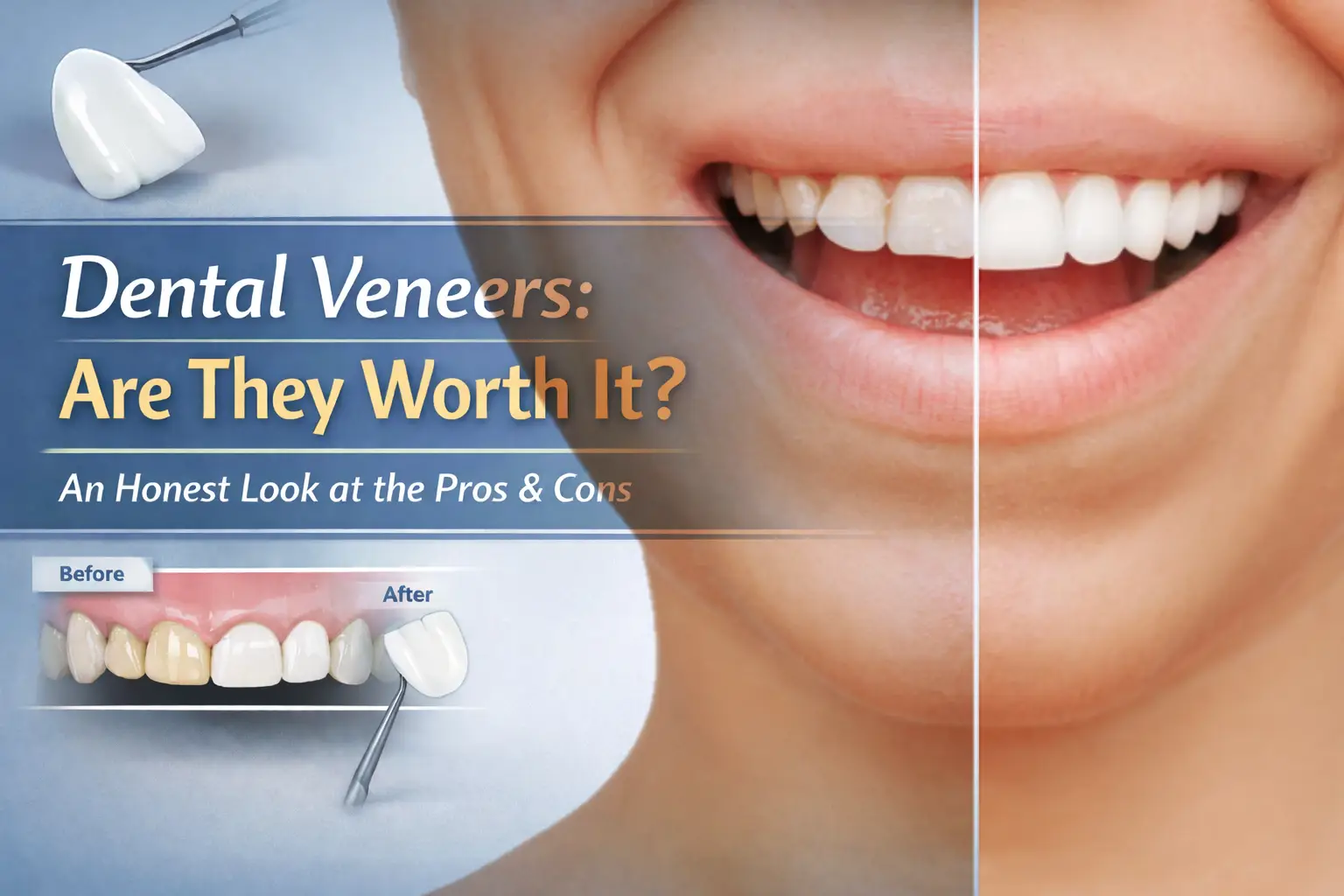
3. Porcelain Veneers

  • Consultation & planning: Digital scans or impressions, photographs, smile design, shade selection.
  • Tooth preparation: A thin layer of enamel (0.3–0.7 mm) may be removed to make room for the veneer.
  • Temporary veneers (if needed) while the lab fabricates your permanent ones.
  • Bonding: Permanent veneers are etched, tried in, adjusted, and bonded with resin cement.
  • Polishing & final adjustments.

Time: Typically 2–3 visits — one for preparation and impressions, one for fitting and bonding, and sometimes a follow-up.
Durability: Porcelain veneers often last 10–20+ years when well cared for, and they resist staining better than composite veneers.

4. Clear Aligners / Cosmetic Orthodontic Adjuncts

  • Though broader orthodontics is a specialty, minor alignment corrections using clear aligners can blend cosmetic and functional goals.
  • Patients often wear a series of removable trays for weeks to months.
  • Time: Ranges from a few months to a year, depending on the case.
  • Durability: Once teeth are aligned, a retainer is essential to maintain results.

5. Cosmetic Crowns / Full Smile Makeover

  • In cases where teeth are heavily damaged or discolored, crowns may be used to restore and enhance.
  • Full-mouth or partial smile makeovers require careful planning, mock-ups, and staged treatment.
  • Time & visits: Often multiple appointments over weeks to months.

How Long Do Cosmetic Results Last, and What Affects Their Longevity?

The lifespan of cosmetic dental work depends on several factors:

  • Type of material (porcelain vs composite)
  • Quality of bonding, margins, and fit
  • Oral hygiene and maintenance (brushing, flossing, avoiding harsh habits)
  • Dietary and lifestyle habits (smoking, coffee/tea/wine, acidic foods)
  • Occlusion and biting forces (bruxism/clenching can stress work)
  • Regular dental checkups and cleanings

Here’s a rough estimate of durability:

  • Teeth whitening: 1–3 years (with maintenance)
  • Dental bonding: 5–10 years
  • Porcelain veneers: 10–20+ years (with excellent care)
  • Enamel reshaping: permanent (since enamel removed)
  • Clear aligner–assisted corrections: long-term with retainers
  • Cosmetic crowns: 10–15+ years

At Almoney Dental Group, we emphasize regular monitoring and maintenance to extend the life of your investment in your smile.

Insurance, Cost, and Financing

Does Insurance Cover Cosmetic Dentistry?

In most cases, purely cosmetic procedures are considered elective and are not covered by dental insurance. Teeth whitening and veneers chosen for purely aesthetic reasons often fall outside insurance benefits.

However, it’s not always black and white:

  • If a procedure addresses functional or structural problems (e.g. a veneer used to restore a fractured tooth), some portion may be deemed medically necessary and qualify for coverage.
  • Some dental plans may offer limited coverage for certain types of crowns or bonding when they serve a restorative role.

To know for sure, we’ll check your specific plan and help you understand what portion, if any, insurance may cover.

Cost & Payment Options

Because cosmetic work involves higher-end materials, lab fees, and extra time, costs are higher than typical general dentistry. But investing in your smile is often one of the most rewarding decisions your patient ever makes.

At Almoney Dental Group, we strive to make cosmetic dentistry accessible through:

  • Flexible payment plans
  • Third-party financing (e.g. “CareCredit”)
  • Staged treatment (breaking work into phases)
  • Transparent cost estimates and treatment planning

We’ll sit down with you, review your goals, show you options, and help you decide on a plan that fits your budget.

Frequently Asked Questions (FAQs)

Q: Is cosmetic dentistry painful?
A: Most cosmetic procedures are minimally invasive and done under local anesthesia when needed. Some post-treatment sensitivity or mild discomfort can occur (especially after veneers), but it’s temporary and manageable.

Q: How many visits will I need?
A: It depends on the procedure. Whitening may take just one visit; veneers often require 2–3 visits; a full smile makeover may take multiple phases over weeks to months.

Q: Can I just whiten one tooth?
A: Whitening is more effective when done on a group of teeth. Whitening a single tooth can lead to a mismatch unless the rest of the arch is whitened first (or veneers/crowns are chosen for that tooth).

Q: What happens if a veneer chips or breaks?
A: Porcelain is strong, but damage can happen under heavy forces or trauma. Minor chips may be repairable; serious damage may require replacement. We can assess on a case-by-case basis.

Q: Do age or existing dental work limit my options?
A: Not necessarily. We take your age, enamel thickness, gum health, and existing restorations into account. Some cosmetic work may be adapted or staged.

Q: Can I get cosmetic work if I have missing teeth or need implants?
A: Absolutely. Cosmetic dentistry often integrates with implant or prosthetic planning. The artistry component ensures your new tooth or crown blends seamlessly.

Q: How do I choose a cosmetic dentist?
A: Ask about:

  • Before & after photos (similar cases)
  • Training in cosmetic or aesthetic dentistry
  • Use of digital smile design or simulation
  • Material quality (porcelain, ceramics, bonding)
  • Patient reviews and testimonials
  • Financing and payment flexibility

At Almoney Dental Group, our team is proud to offer comprehensive cosmetic and general dentistry under one roof with advanced training, digital planning, and long-term follow-up.

Why Choose Almoney Dental Group?

  • Three convenient locations – Miamisburg, Kettering, and Delco Park serve all greater Dayton suburbs
  • Comprehensive care – We handle both general and cosmetic dentistry, so your functional needs and aesthetic goals are seamlessly integrated (see our cosmetic dentistry page).
  • Experienced clinicians – Our dentists invest in continuing education and modern materials, bringing both science and artistry to every case
  • Personalized treatment plans – We listen to your goals, show you digital mockups, and walk you through options
  • Flexible financing – We offer payment plans and third-party programs
  • Patient-focused philosophy – Comfortable environment, clear communication, and follow-up support

If you live in or around Miamisburg, Kettering, Delco Park, or anywhere in the Dayton region, we are here to bring your smile vision to life.

Schedule Your Cosmetic Consultation Today

Thinking about enhancing your smile? The first step is a cosmetic consultation at one of our offices (Miamisburg, Kettering, or Delco Park). In that visit, we’ll:

  1. Review your dental history, photos, and concerns
  2. Perform an oral health exam (ensuring no untreated issues)
  3. Discuss your smile goals and possible treatment options
  4. Present cost estimates, timelines, and financing
  5. Show sample before/after cases and help you visualize your potential results

Your dream smile is closer than you think — you just need to take the first step. Contact us at Almoney Dental Group or request your consultation online today. Let us help you smile with confidence — beautifully and healthily.